The Current That Still Runs
In a Colorado mountain valley in 1891, a mining company switched on the world's first long-distance AC power plant. It is still generating today. What does it mean to hold the record of a machine that has outlived everyone who built it?

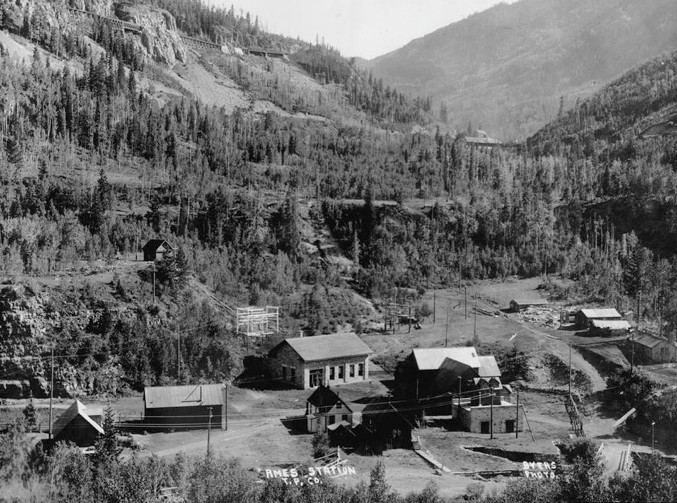
High in the San Miguel mountains of Colorado, near the mining town of Telluride, there is a small powerhouse beside a creek that has been making electricity since 1891. It is called the Ames Hydroelectric Generating Plant, and by the reckoning of the American Society of Civil Engineers it is the oldest continuously operating power project in the United States. The machinery has been replaced and upgraded across thirteen decades, but the plant itself has never really stopped. The current that started flowing the year Idaho became a state is, in a meaningful sense, still flowing today.
Why a mining company changed the world
Ames was not built to make history. It was built to solve a problem. The Gold King Mine, nearly three miles away and 3,000 feet higher, was burning through money on the coal and timber it took to run its mills. L.L. Nunn, the mine's manager, gambled on a technology most engineers of the day considered unproven and dangerous: alternating current, which — unlike the direct current of Edison's early stations — could be pushed across long distances at high voltage without losing all its strength to the wire. Working with George Westinghouse and the young Nikola Tesla's designs, Nunn ran a transmission line nearly three miles through the mountains. It worked. It was the first commercially successful long-distance, high-voltage AC transmission in the world.
Every transmission line on Earth — every grid that carries power from a distant dam or reactor to a city that never sees it — descends from a line strung through a Colorado canyon to run a gold mill.
That is the lineage worth pausing on. The argument over AC versus DC — the so-called War of the Currents — was settled not only in laboratories and courtrooms but in this remote valley, by a mining company that simply needed cheaper power. The built world advances like this more often than we admit: not by grand decree, but by someone with a practical problem betting on a better way of doing the work, and leaving behind a result the rest of the world quietly inherits.
The record of a machine that outlived its makers
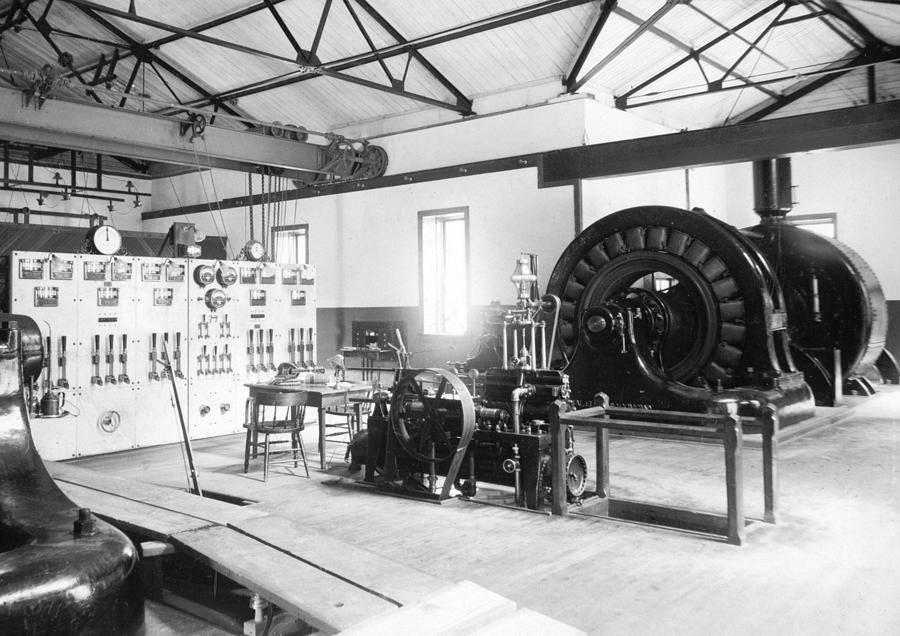
Here is the question Ames poses to anyone trying to hold the record of the built world. Everyone who designed, financed, and assembled that original plant is long dead. The wooden poles in the 1891 photograph are gone. Much of the equipment has been swapped out more than once. And yet the asset persists — the same plant, on the same creek, doing the same job. What, exactly, is the thing we would be keeping a record of? Not the original copper and timber, most of which is gone. We would be keeping the record of a continuous identity: a built thing whose story is the sum of every crew that ever maintained it, every upgrade signed off, every decade it kept running.
This is what a ledger is for. A photograph captures a moment; a deed captures an ownership; but only a continuous record can hold a 135-year-old machine as one coherent biography. Ames did not survive because any single part of it was permanent. It survived because there was always someone to do the next repair — and because, somewhere, enough of the record was kept that the people who came after knew what they had inherited and how to keep it alive.
Propreti starts in Boston, with crews and buildings whose work we can witness now. But Ames is the reason the Archive reaches back as far as there is a record to cite. A plant that has run since 1891 is proof of the only thing the built world ultimately rewards: not the moment of construction, but the long, unglamorous keeping of what was built. The current still runs in that Colorado canyon because someone, in every generation, refused to let the record — or the machine — go dark.