The Hidden Craft: Amerock Manufacturer
Long before anyone counted cranes against a sunset, a different downturn was being read off a different object: the drawer pull. Amerock has made cabinet hardware in Rockford, Illinois since 1928 — through the Depression, five owners, and every housing cycle in between. The story of a single knob is the story of the whole built economy, told from the inside of the cabinet.

In my last piece I argued you could read the health of an entire economy by counting the cranes against a Boston sunset. Here is the same truth, told from the opposite end of the scale — not from a four-hundred-foot tower, but from the palm of your hand. Pick up a cabinet pull. Turn it over. Almost no one ever does, and that is exactly the point: the most honest objects in the built world are the ones nobody is supposed to notice. Behind that small piece of bronze is a century-long story about cycles, survival, and the quiet craft that holds a kitchen together.
In 1928, two Swedish immigrants — Reuben and Gedor Aldeen — walked out of Rockford's National Lock Co. with eight other men and started the Aldeen Manufacturing Co. They are believed to be the first company in America to do nothing but make cabinet hardware. Until then, the hardware in most kitchens was crude and purely functional. The Aldeens made a bet that Americans would pay for hardware that was matched, decorative, and beautiful — that the hidden parts of a home deserved craft, too. Their first equipment was almost comically humble: porcelain iceboxes and car batteries rigged for plating. First-year sales came to about $69,000.
Read the cycle off the knob
Then the cycle arrived, the way it always does. The 1929 crash gutted Rockford: building permits fell from roughly 6,000 in 1928 to eleven in 1931, and to just two in 1934. By every right the young company should have died with the housing market. Instead it found its footing — introducing a full lineup of matched pulls, knobs, hinges, and push-button catches by 1933, landing a 1932 order from Andersen Windows that grew into a relationship critical to its survival. In 1940 it fused the words "American" and "Rockford" into a single brand: Amerock. The drawer pull tracked the housing cycle exactly the same way the crane does — it just did it quietly, on a shelf, where no one was watching for it.
A crane is the economy shouting. A cabinet pull is the economy whispering. They are reading from the same script — boom, overbuild, downturn, survival — only one of them is loud enough to put on the evening news.
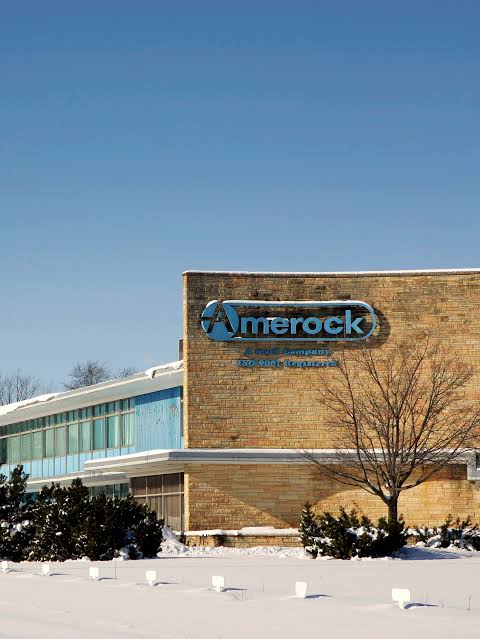
What happened next is the part that should sound familiar to anyone who read about the cranes. Amerock was bought by Stanley Works in 1966 — a merger the FTC later ruled illegal and forced unwound. It was sold to Anchor-Hocking in 1974, then swept up by Newell in 1987, and on into Newell Rubbermaid. Five owners. Each downturn — the brutal 1979–82 housing collapse especially — brought layoffs, frozen wages, and a scramble to diversify away from dependence on cyclical housing starts. The company that survived was never the same company twice. Ownership churned like crane iron in a flooded auction market.
What actually survived
And yet at the peak, roughly seventy percent of American kitchens carried Amerock hardware. Think about what that means. The corporate entity was bought, sold, contested, and absorbed five times over — but the thing that endured was the brand and the record of quality attached to it. The trust outlived every owner. That is the same lesson the cranes taught from the other end of the scale: the iron depreciates, the ownership churns, the cycle turns — and what holds its value is the proven record of who made the thing and how well.
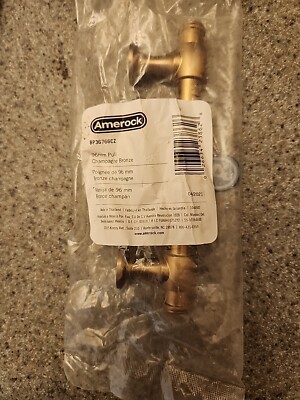
This is why a fabricator like Apex Fabrication, a builder like Meridian Builders, and an owner like Keystone Property Management belong in the same record as a knob from Rockford. The pull in the photo above is a sealed bag of champagne bronze that will outlive the cabinet it goes on. Someday someone renovating that kitchen will turn it over, read the part number, and want to know its whole story — who made it, when, to what standard. Almost always, that story is gone. It does not have to be. The hidden craft deserves a kept record exactly as much as the skyline does. We have just spent a century not bothering to keep it.
Editorial placeholder
This is Propreti's own commentary, featuring the public work of Amerock. It is not an endorsement, partnership, or chain-verified record. This space is reserved for Amerock to author — or commission — its own story here.
Verified in this story
The makers named above, connected to their verified work.